Cost of Building a 2-Bedroom House in Kenya (2025)
Discover the exact cost of building a 2-bedroom house in Kenya in 2025. Learn about price ranges, per-m² rates, cost breakdowns, regional price differences, and ways to save while building your dream home affordably and efficiently.
Introduction
Cost of Building a 2-Bedroom House in Kenya (2025)
Building a 2-bedroom house in Kenya has become one of the most popular goals for new homeowners seeking affordable comfort. The cost of building a 2-bedroom house in Kenya varies depending on size, materials, design, and location. With careful planning and realistic budgeting, you can build a quality home without overspending. This guide breaks down all costs step by step and shows how to make your project cost-effective and stress-free.
Quick Answer — Typical Cost Ranges to Build a 2-Bedroom House in Kenya
The average cost to build a 2-bedroom house in Kenya in 2025 ranges between KSh 2.5 million and KSh 5.5 million, depending on design and materials used. This translates to roughly KSh 35,000 to KSh 70,000 per square metre, including labour and finishes. Lower figures fit rural self-build projects, while urban builds tend to cost more due to higher labour and material prices.
Typical Low, Mid, and High-Cost Scenarios
A low-cost build uses simple finishes, minimal design features, and locally available materials. Mid-range homes include tiled floors, proper roofing sheets, and average-quality finishes. High-end builds often have modern designs, imported fittings, and detailed finishes. Understanding your category early helps control your budget before construction begins.
Understanding Per Square Metre Costs
Most contractors in Kenya estimate construction using cost per square metre. This figure includes materials, labour, and equipment but excludes land cost and permits. Knowing your floor area and rate helps you calculate a close estimate of your total construction cost before seeking quotes.

How Builders Estimate Cost — Per m², Unit Rates and BOQ Method
Construction estimates are prepared using either per-square-metre pricing or a detailed Bill of Quantities (BOQ). For small residential projects, per-square-metre pricing is faster for initial budgeting, but a BOQ gives better accuracy when ready to build.
Per Square Metre vs Full BOQ
A per-square-metre rate helps homeowners compare options quickly, but a BOQ breaks down every item from excavation to roofing. BOQs prevent hidden costs and protect you from underpricing traps. Always request one from a registered quantity surveyor once your drawings are complete.
Converting House Size to Expected Cost
If your 2-bedroom house is 80 m², multiply by your expected rate—say, KSh 45,000 per m²—to get KSh 3.6 million. Always include a 10% contingency for unforeseen costs. This formula is the foundation of accurate cost estimation used by most reputable contractors in Kenya.
Detailed Line-Item Cost Breakdown — From Foundation to Finishes
Understanding each stage of construction helps identify where your money goes and how to save. Below is a breakdown of the main cost components that determine the cost of building a 2-bedroom house in Kenya.
Foundation and Groundworks
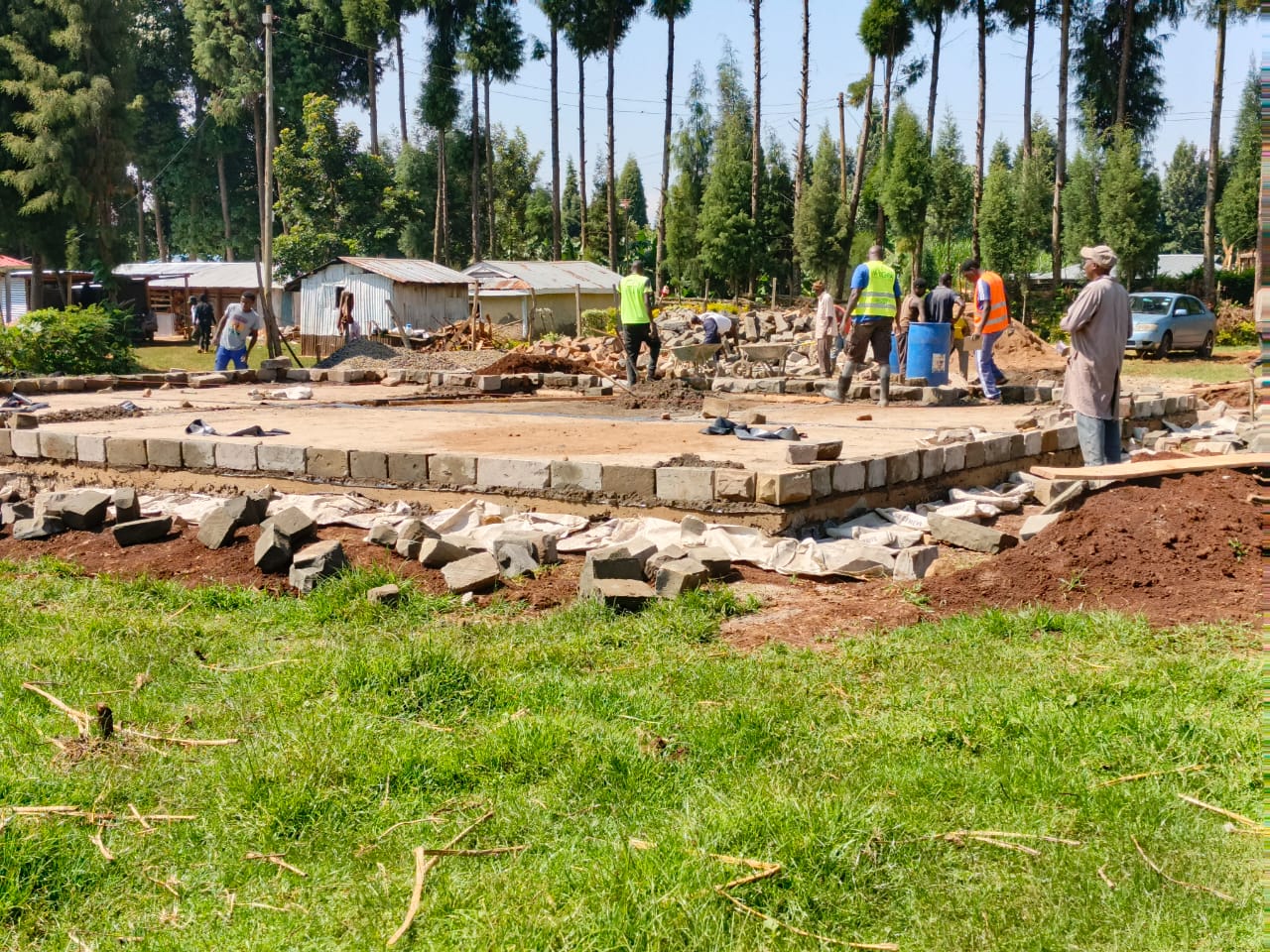
The foundation accounts for up to 15% of the total budget. It includes excavation, hardcore, blinding, and reinforced concrete footing. Costs vary with soil type and design depth, but proper site preparation prevents future structural issues.
Superstructure (Walls, Columns, and Lintels)
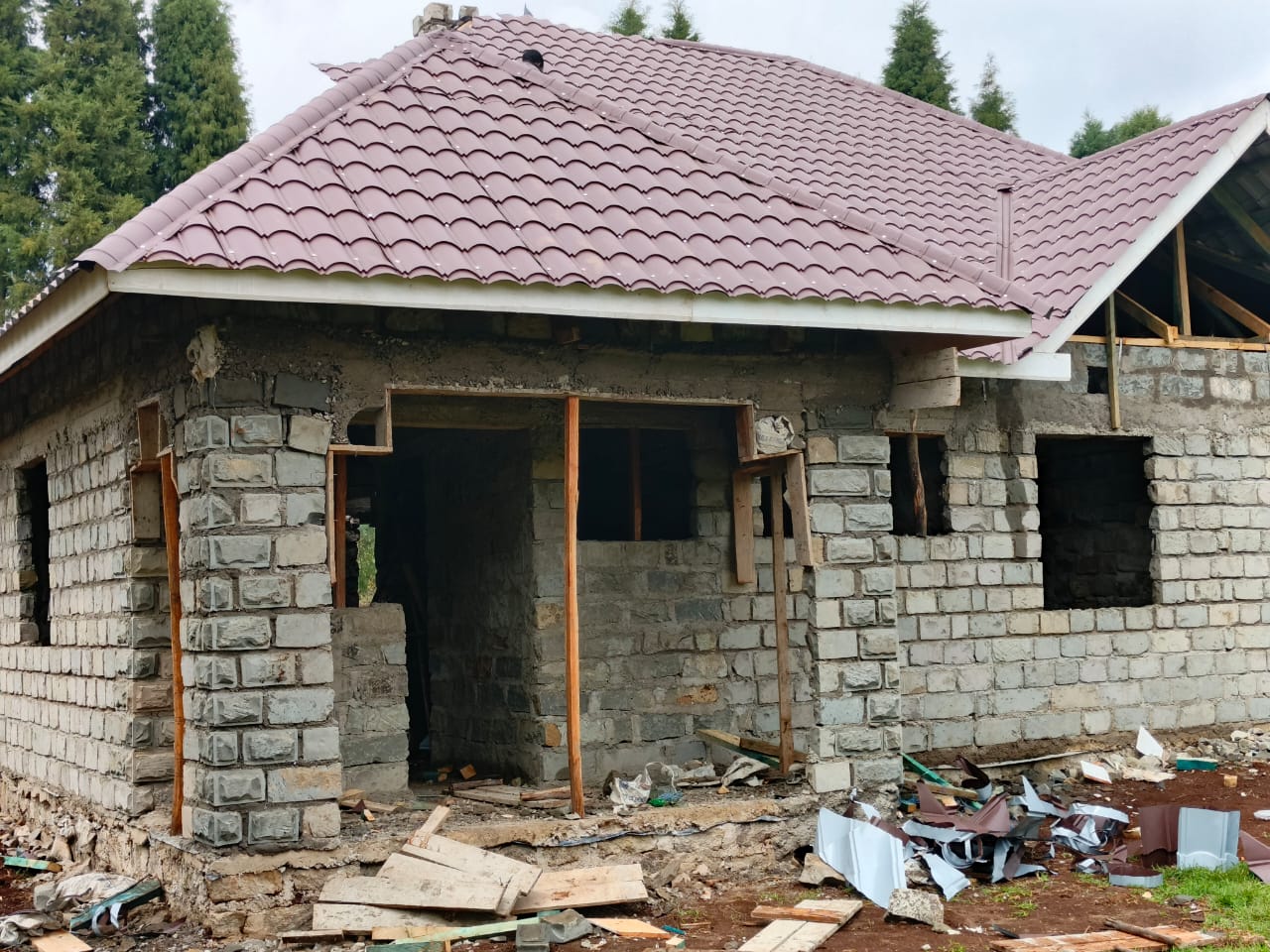
This stage uses blocks, mortar, steel, and cement. On average, it consumes 20–25% of the total project cost. Reinforced columns and beams ensure the structure is strong and compliant with Kenyan building codes.
Roofing
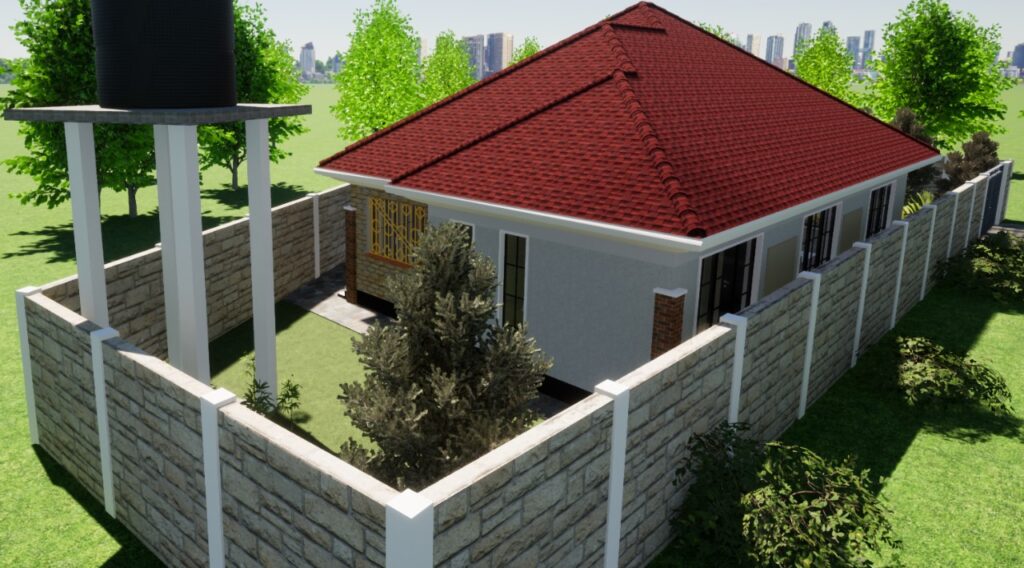
Roofing consumes roughly 15% of your budget and depends on materials like mabati sheets, tiles, or shingles. Truss design and roof shape also influence cost, with gable and flat roofs often cheaper than complex hip roofs.
Windows, Doors, and Joinery
These features account for around 8–10% of your total cost. Wooden frames and steel doors are more affordable than aluminium or imported alternatives. Always balance aesthetics with durability for long-term savings.
Finishes, Plumbing, and Electrical Work
Final finishes take another 20–25% of the budget. This includes plastering, tiling, painting, electrical wiring, and plumbing fittings. Simple finishes can reduce cost without compromising comfort or safety.

Three Sample Budgets — Low, Mid, and High-Quality Builds
Realistic examples help homeowners visualise how their money translates into construction quality. The differences mainly arise from materials, labour rates, and finishing preferences.
Low-Cost Build (Around KSh 2.5–3 Million)
This budget covers basic cement finishes, standard iron sheets, and local timber doors. Labour costs are moderate, and most work is done manually without machinery. Ideal for rural settings or owner-supervised projects.
Mid-Range Build (Around KSh 3.5–4.5 Million)
This option uses improved materials such as ceramic tiles, steel trusses, and better paint finishes. It provides modern comfort while keeping costs manageable for middle-income earners.
High-End Build (KSh 5 Million and Above)
High-end homes feature imported tiles, gypsum ceilings, and premium sanitary fittings. Contractors use modern designs and high-spec materials for long-term value. Though expensive upfront, maintenance costs are lower over time.

Regional and Site Factors That Affect Cost
Where you build in Kenya greatly influences total expenditure. Costs vary by transport distance, climate, and access to skilled labour.
Urban vs Rural Cost Differences
Building in Nairobi or Mombasa is more expensive due to high labour rates, strict county requirements, and material delivery charges. Upcountry builds cost less but may require more logistics for materials.
Terrain, Accessibility, and Site Conditions
Sites with poor soil, slopes, or limited access increase costs for excavation and foundation stability. Always factor in transport and site preparation expenses early to avoid overruns.
Statutory Costs, Professional Fees, and Approvals
These costs are often overlooked but mandatory before breaking ground. They form about 5–10% of the total construction cost.
Professional Fees
Architects, structural engineers, and quantity surveyors charge between 4% and 8% of the total cost. Their involvement ensures your design meets safety standards and avoids future legal or structural issues.
County Permits and NEMA Approvals
You must submit your architectural drawings for approval and pay county fees. Environmental assessments may also be required depending on project location. Always confirm fees with local authorities before budgeting.
Getting Accurate Contractor Quotes
Selecting a qualified contractor is crucial for cost control and project success. Avoid vague quotations or verbal agreements that lead to overruns.
Information to Include When Requesting Quotes
Provide complete drawings, a clear BOQ, materials list, and finish specifications. Contractors rely on detailed information to give accurate pricing and timelines. Always compare at least three quotes before choosing one.
Payment Schedule and Contract Milestones
Agree on payment based on project milestones — such as foundation, roofing, and finishes. Include timelines, penalties for delays, and material quality clauses in your contract. This protects both you and the contractor.
Ways to Reduce Cost Without Sacrificing Quality
Reducing cost does not mean compromising durability. Smart design and material choices can save up to 15% of total expenses.
Value Engineering and Material Alternatives
Use cost-effective materials such as interlocking blocks, locally available stone, or galvanised steel roofing. Design your home around standard material sizes to minimise waste.
Efficient Project Management and Labour Planning
Hire skilled labourers on a per-stage basis and avoid unnecessary idle time. Early procurement and proper scheduling prevent cost inflation during peak seasons.
Conclusion
The cost of building a 2-bedroom house in Kenya depends on location, design, and material quality. Whether you spend KSh 2.5 million or KSh 5 million, smart planning ensures every shilling adds value to your home. Always compare quotes, hire professionals, and use verified suppliers. With the right team and guidance, you can complete your project efficiently and within budget.