Building Permits in Kenya
Learn the full building permit process in Kenya — step-by-step approvals, required documents, typical costs & timelines, county variations, inspections, penalties, and practical checklists to get your house plan approved and start construction legally.
Introduction
Building permits in Kenya are a legal requirement for anyone planning to construct, renovate, or expand a building. This guide walks you through everything you need to know — from applying for approvals to avoiding costly fines and passing inspections smoothly.
Whether you’re a homeowner, developer, or contractor, understanding how to get your building permit approved can save you time, money, and legal trouble. You’ll also learn which documents to prepare, which agencies to contact, and how to ensure your construction meets all safety and environmental standards.
What is a Building Permit in Kenya?
A building permit in Kenya is an official authorisation from your county government allowing you to begin construction on a specific piece of land. It proves your project has met all planning, safety, and environmental requirements set by law.
Getting a building permit ensures that your project follows local zoning rules, building codes, and environmental regulations. Without it, you risk fines, demolition, or legal action from authorities.
Purpose and Legal Basis (Planning, Safety, Environment)
The main purpose of a building permit is to protect the public and the environment. It ensures that all structures meet safety standards and are built on legally approved land. Counties issue these permits under Kenya’s Physical and Land Use Planning Act and the Building Code, which outline how developments should be approved and supervised.
Environmental safety is also enforced through the National Environment Management Authority (NEMA), which checks whether your project poses any ecological risks before approval. This ensures that construction is sustainable and compliant with national laws.

Who Needs a Permit? (Homeowners, Developers, Renovations vs New Builds)
Any individual or company planning to construct, expand, or alter a building must obtain a permit. This applies whether you’re building a family home, a commercial property, or renovating existing structures.
Even small projects, like extensions or perimeter walls, often require county approval to confirm structural safety and compliance with local planning rules. Developers and contractors must also register their projects with the National Construction Authority (NCA) before starting work.
Short Summary of the Full Approval Lifecycle (From Plan to Final Occupation Certificate)
The approval lifecycle begins with preparing your architectural and structural drawings through licensed professionals. These are submitted to your county government’s planning department for assessment. Once approved, you’ll also need clearances from NEMA and registration with NCA before breaking ground.
After construction, county inspectors visit your site to confirm compliance at various stages. Once the project passes final inspection, you’re issued an Occupation Certificate, proving that the building meets all standards and is safe to use.

Key Authorities & Where Their Roles Overlap
Understanding the main authorities involved helps you submit your applications correctly and avoid duplicate approvals. Each agency plays a distinct role in ensuring that construction projects in Kenya meet safety, environmental, and legal standards.
County Development/Planning/Physical Planning Department (Plan Approval & Permit Issuance)
Your county government is the primary authority that issues building permits. The County Physical Planning Department reviews architectural and structural drawings to confirm they comply with zoning regulations, setbacks, land use, and infrastructure plans.
Once approved, the department issues a development permission or building permit, which authorizes you to begin construction. The county also oversees site inspections to ensure ongoing compliance during the building process.
National Construction Authority (NCA) — Contractor Registration & Compliance
The National Construction Authority (NCA) ensures that all building works are carried out by qualified professionals and registered contractors. Before starting construction, your project must be registered with the NCA, especially for commercial or multi-unit developments.
They monitor compliance with construction standards, enforce safety regulations, and may conduct random site inspections. The NCA also issues compliance certificates required for insurance or financing..
National Environment Management Authority (NEMA) — EIA / NEMA Licences and Screening Reports
The National Environment Management Authority (NEMA) reviews environmental impacts of proposed projects. Smaller residential buildings often undergo environmental screening, while larger developments require a full Environmental Impact Assessment (EIA) before approval.
A NEMA licence confirms your construction won’t cause harm to the environment and is compliant with national sustainability standards. Failure to obtain this licence when required can delay or cancel your building permit.

Survey/Lands Office & Title Searches (Land Ownership Verification)
Before any permit is approved, proof of land ownership is required. The Survey and Lands Office verifies that your plot exists, matches your title deed, and doesn’t overlap with public land or restricted zones.
A title search confirms rightful ownership and helps avoid disputes or delays during approval. This step protects both the applicant and the approving authorities from fraudulent applications.
Other Stakeholders: Utilities (Water, Sewer), Fire, Heritage, County Environment, Wildlife (Where Applicable)
Certain projects may require input from other agencies like water and sewerage companies, fire departments, or heritage conservation authorities. For example, fire approvals are mandatory for commercial buildings, while NEMA collaborates with wildlife services for projects near parks or reserves.
In some counties, environmental or drainage departments must also confirm infrastructure connections before the final permit is granted.
Types of Permits & Approvals (Full List)
Every construction project in Kenya goes through a set of layered approvals. Knowing each permit helps you plan your timeline, costs, and compliance steps correctly.
Architectural Plan Approval (What’s Reviewed)
Architectural plans are reviewed by the county’s physical planning department to confirm zoning, building coverage, access, and aesthetics. The department ensures your building fits within the county development control policies and neighborhood character.
Structural Plan Approval and Engineer Sign-Offs
Structural drawings must be signed by a registered structural engineer and approved to ensure the building’s integrity and safety. This process verifies that materials, foundations, and reinforcements meet Kenya’s building code.
EIA / Environmental Screening and NEMA Approvals (When Required)
If your project might impact the environment — like near wetlands, rivers, or forests — you’ll need NEMA screening or a full EIA licence. Smaller projects might only require a screening report.
Environmental approval is essential before your county can issue a building permit.
NCA Project Registration & Contractor Vetting
The NCA must register the project before construction begins. You’ll need to submit approved plans, contractor details, and ownership documents. This ensures your contractor is qualified and accountable for site safety and standards.
Building Permit / Development Permission (County)
After all supporting approvals are in place, the county issues the official building permit — your green light to start construction. The permit must be displayed on-site and kept accessible during inspections.
Trade and Utility Permits (Water, Sewer, Electricity Wayleaves)
In some cases, you must obtain additional permits from utility providers. These include wayleaves for power and water lines, or approval for sewer connections. They confirm your project won’t interfere with public utilities.
Occupation/Completion Certificate / Final Inspection
Once construction is complete, the county conducts a final inspection. If the structure meets approved standards, you receive an Occupation or Completion Certificate, confirming your building is safe for use.
This document is often required for property registration, sale, or occupancy.
Pre-Application Checklist (What to Prepare Before Submission)
A strong application package speeds up approvals and reduces back-and-forth with county offices. Prepare the following before submission.
Documents: Title Deed, Approved Survey Plan, Identification, Filled Application Form, Wayleaves, Consent Letters (Neighbours), Structural Drawings, Soil Report (If Needed)
Gather all essential documents early. These typically include:
- Title deed and current land search
- Approved survey plan and mutation form (if applicable)
- National ID or company registration documents
- Filled county application form
- Structural and architectural drawings
- Wayleave and consent letters (where required)
- Soil test or geotechnical report for multi-storey buildings
When to Get Professional Reports: Geotechnical, Structural, Traffic, or EIA Screening
Some projects need specialised reports before submission. For example, multi-storey or sloped-site buildings often require a geotechnical report, while commercial sites may need traffic impact assessments.
Consult your architect or engineer early to determine which reports apply to your project type.
Sample Templates & Downloadable Checklist (Callout Box / CTA)
Provide readers with an easy-to-follow permit application checklist. Offer a downloadable PDF or editable form listing every required document and step.
This CTA helps capture leads and gives homeowners a practical resource to stay organised.
Step-by-Step Process to Obtain a Building Permit (Detailed Procedural Flow)
Following the correct sequence prevents delays or rejections. Here’s the typical order for obtaining building permits in Kenya.
Step 1: Engage Architect & Structural Engineer — Prepare Drawings & Bills of Quantities
Start by hiring a registered architect and structural engineer. They’ll design your plans according to the county’s zoning and building codes, and prepare the Bill of Quantities (BoQ) to estimate materials and labour.
Step 2: Conduct Land/Title Checks & Obtain Necessary Consents
Verify your land ownership through a title search at the Ministry of Lands or Ardhi House. If multiple owners exist, obtain written consent before applying. For properties near boundaries, neighbor consent letters may be needed.
Step 3: Submit to County Development Control (Paper/e-Submission Options)
Once all documents are ready, submit your application to the County Development Control Department. Some counties, like Nairobi and Kiambu, allow e-submission through online portals, while others still require physical files.
Digital submission saves time, reduces errors, and lets you track approval progress online.
- How to Use County e-Portals (Summary: Nairobi, Mombasa, Kiambu Examples)
Each county has its own e-platform. In Nairobi, use the eConstruction Portal; in Mombasa, the County Planning Portal; and in Kiambu, the County Building Control portal. Create an account, upload scanned documents, and pay fees online.
Keep copies of your receipts and approval numbers for future reference.
Step 4: NEMA Screening / EIA Process (If Applicable) — Timelines & Exemptions
If your project requires NEMA clearance, start screening early to avoid permit delays. Environmental screening usually takes 14–30 days, while full EIAs may take up to 90 days depending on project scale.
Residential houses on existing plots often qualify for exemption with only a screening report.
Step 5: NCA Registration & Contractor Documentation (If Commercial or NCA-Triggered Works)
For projects above the threshold, register with the National Construction Authority. Submit contractor certificates, project details, and approved plans. Once verified, NCA issues a Project Registration Number required before site mobilisation.
Step 6: County Inspections During Construction — Common Inspection Checkpoints
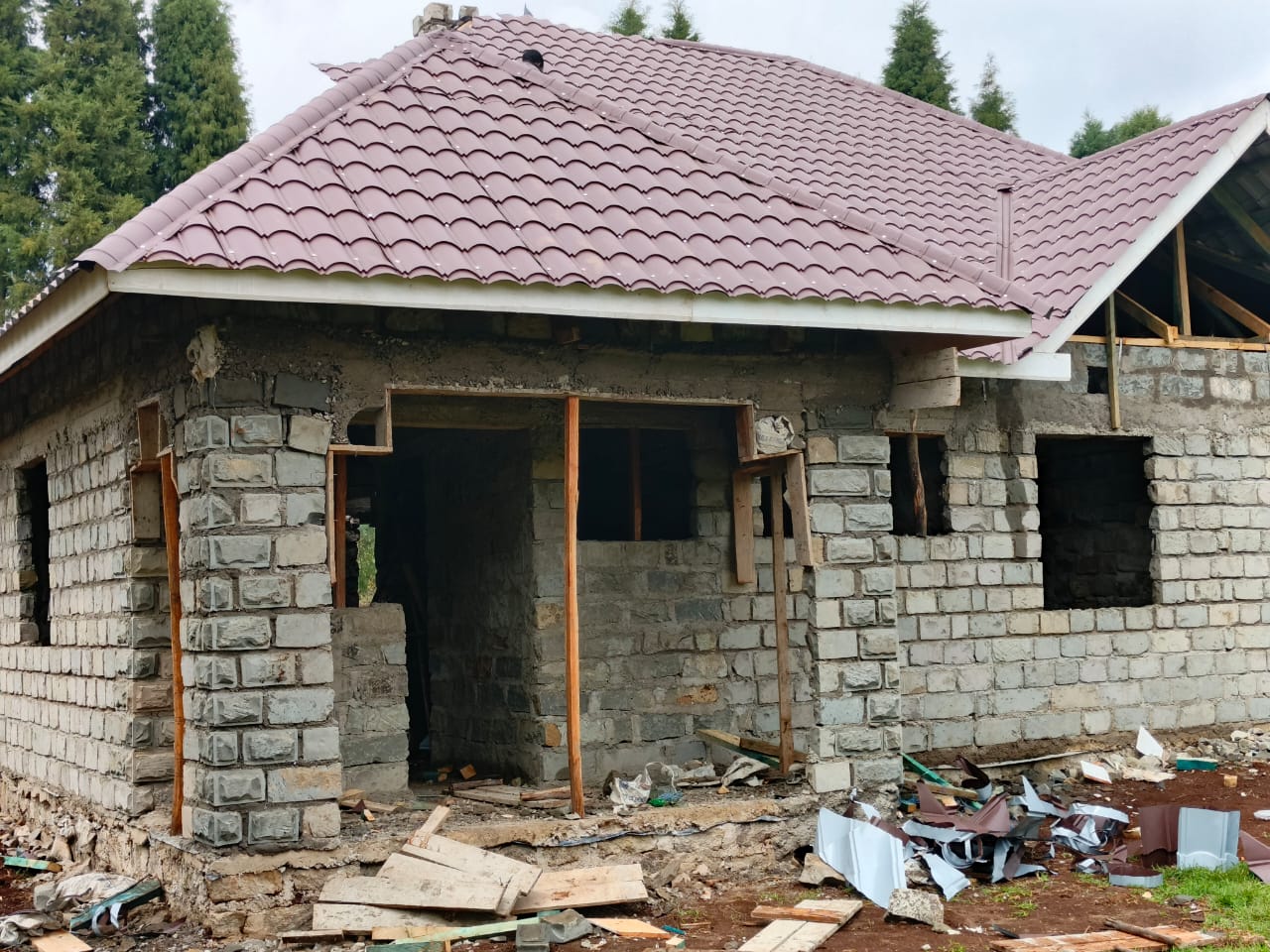
Counties conduct mandatory inspections at key stages: foundation, slab, wall plate, roofing, and completion. These checks ensure you’re building exactly as approved.
Keep inspection reports on-site and signed by county officials for recordkeeping.
Step 7: Final Inspection & Occupation Certificate Issuance
After finishing construction, request a final inspection. The county reviews workmanship, structural stability, sanitation, and access. Once approved, you’ll receive an Occupation Certificate, confirming your building is legally fit for use.
County Variations & Local Requirements (Crucial for Transactional Users)
Building permits in Kenya are processed by individual county governments, meaning requirements, costs, and timelines can differ depending on where you build. Understanding these local variations ensures your submission is accurate and avoids unnecessary rejections or delays.
Examples of County Differences (Application Fees, Forms, Portal Names, Inspection Frequency)
Each county has unique approval processes and fee structures.
For example:
- Nairobi City County uses the eDevelopment Permit System and typically requires several stages of inspection before issuing an occupation certificate.
- Kiambu County and Mombasa County may have different fee rates or use semi-digital application forms.
- Smaller or rural counties might rely on manual submissions and have fewer inspection checkpoints, making approvals slightly faster.
Always confirm the current requirements on your county’s planning website or physical office notice boards before submission.
How to Find Your County’s Procedure & Contacts (Practical Links + Call Scripts)
To verify your county’s process:
- Visit your County Government’s Physical Planning or Development Control Department page online.
- Check for downloadable application forms and published fee structures.
- Call or email the listed officers for clarification — use a simple call script like:
“Hello, I’d like to confirm the process and current fees for applying for a building permit in [County Name]. Could you please guide me to the right department or officer?”
Most counties also post updates on their social media platforms (especially Twitter/X and Facebook) regarding new approval systems or portal maintenance.
Urban vs Rural Differences (e.g., Masterplans, Conservation Areas, Setbacks)
Urban counties such as Nairobi, Kisumu, and Nakuru are guided by masterplans that define zoning rules, plot ratios, and building heights.
Rural counties, on the other hand, often have more flexible set-back rules but may impose restrictions in environmentally sensitive areas or near protected lands.
For projects in heritage zones or near wildlife reserves, additional reviews from the National Museums of Kenya or the Kenya Wildlife Service (KWS) may apply.
Costs, Fees & Typical Timeframes (Actionable, Realistic Ranges)
Before applying for a building permit in Kenya, it’s vital to understand the different fees involved and how long the process typically takes. These costs vary by project size, location, and professional involvement but can be estimated within certain ranges.
Fee Components: Plan Approval Fees, Permit Fees, Inspection Fees, NEMA Fees, Consultant Fees, NCA Fees
Here’s what contributes to your total cost:
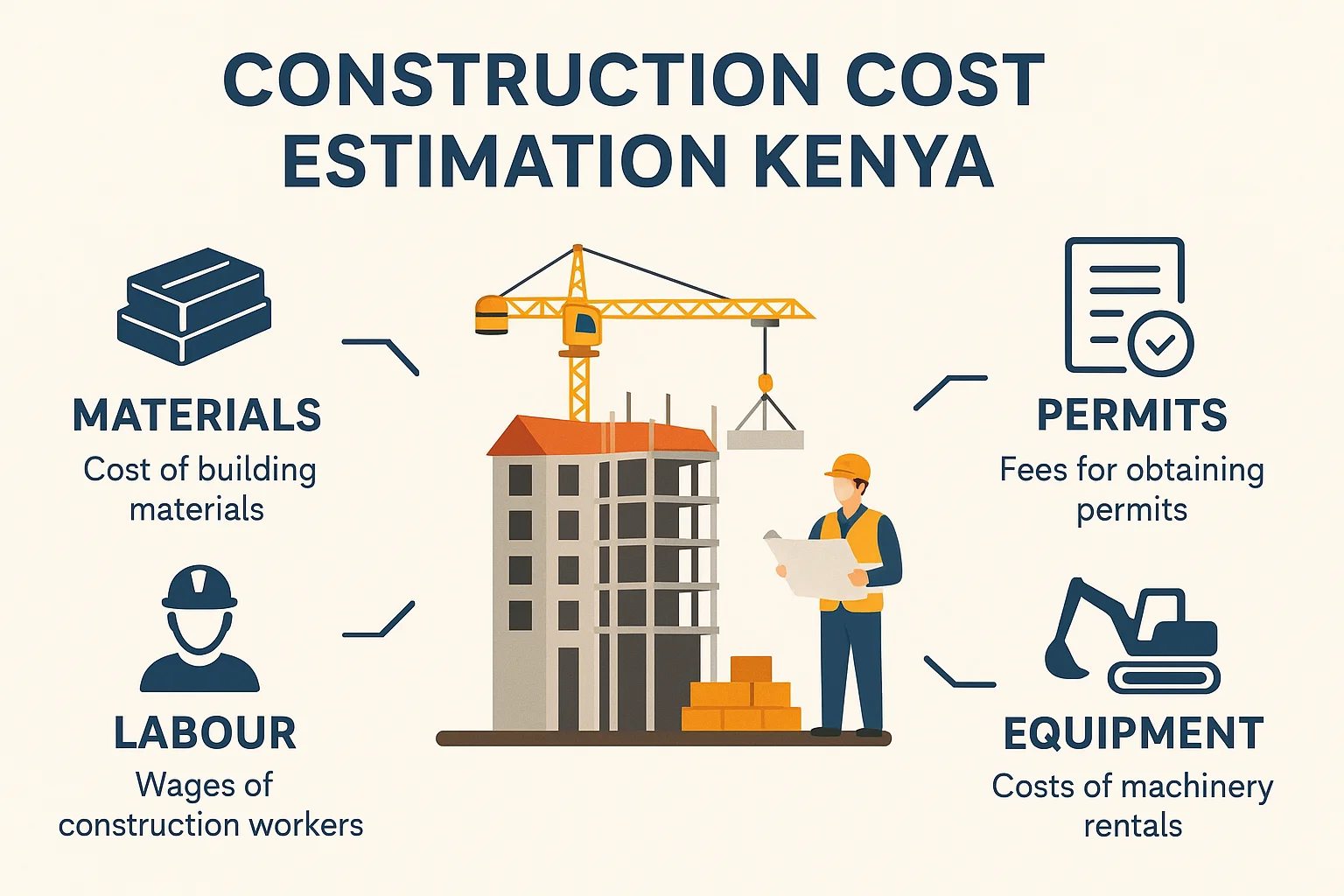
- County approval fees: Charged based on the project’s floor area (per square metre).
- Permit and inspection fees: Cover construction monitoring and compliance checks.
- NEMA fees: Apply for projects that require environmental screening or full EIA.
- Consultant fees: Paid to your architect, structural engineer, and quantity surveyor.
- NCA registration fees: Based on project cost and category (residential, commercial, industrial).
Always ask your architect or quantity surveyor to give you an itemised cost estimate before submission.
Typical Cost Ranges for Residential House Plans (Low / Mid / High-End Estimates)
Costs depend on the house design, county, and level of finish:
- Low-end (basic 2–3 bedroom house): KSh 30,000 – KSh 80,000 in total county and permit fees.
- Mid-range (3–4 bedroom suburban home): KSh 80,000 – KSh 150,000.
- High-end or multi-storey homes: KSh 150,000 – KSh 400,000+.
Example:
For a 150m² house in Kiambu County at KSh 1,200/m² approval rate, plan fees would be KSh 180,000, excluding consultant and inspection charges.
Typical Processing Times (First Submission, Queries, Re-Submission, Final Sign-Off) and How to Expedite
Most counties process straightforward residential applications within 2 to 6 weeks, provided all documents are in order.
Common delays happen due to missing signatures, unpaid NCA fees, or incomplete EIA reports.
To speed up your application:
- Work with registered professionals.
- Ensure your documents are scanned and named correctly (for e-submissions).
- Respond quickly to any county queries.
- Schedule inspections promptly when called.
Following up every 10–14 days helps prevent your file from being “stalled” in departmental queues.
Inspections, Compliance & On-Site Management
Once your building permit in Kenya is approved, you must comply with county inspection requirements throughout the construction phase. Regular inspections help ensure your structure meets safety standards and the approved designs — avoiding fines or project stoppages.
Standard Inspection Milestones (Foundations, Slab, Roofing, Finishes)
Counties typically conduct mandatory inspections at key construction stages:
- Foundation stage: Verifies excavation depth, soil stability, and reinforcements.
- Slab stage: Checks waterproofing, concrete mix, and column placement.
- Roofing stage: Ensures truss design, stability, and material compliance.
- Final/finishing stage: Evaluates workmanship, plumbing, electrical work, and safety exits.
Skipping any inspection can delay your final occupancy certificate.
How to Maintain an On-Site Permit Pack (Approved Plans, Signed Changes, Inspection Logs)
Every active site should have a permit pack accessible to inspectors. This includes:
- Approved architectural and structural plans (stamped by the county).
- Any officially signed plan amendments.
- Inspection logbook for recording each visit and approval.
- Copies of the NCA registration, safety reports, and insurance.
Keeping all documents organised shows compliance and helps resolve disputes quickly during inspections.

Handling Mid-Construction Changes & Amendments (Minor vs Major Variations)
If changes occur during construction, notify your architect or structural engineer immediately.
- Minor changes (like internal partition adjustments) can be noted in the inspection log.
- Major changes (like altering the footprint or height) require formal re-approval from the county before continuing work.
Proceeding without re-approval can lead to penalties or rejection during the final inspection.
Record Keeping for Resale / Title Transfers
After project completion, proper record keeping ensures smooth property resale or title transfer. Maintain:
- The approved plans and occupation certificate.
- All inspection and compliance reports.
- NEMA, NCA, and county approval documents.
Potential buyers or banks often request these records before financing or transferring ownership, proving the structure’s legality.
Penalties, Enforcement & How to Regularise Illegal Works
Non-compliance with building permit regulations in Kenya can lead to heavy financial penalties or demolition. It’s crucial to understand the enforcement procedures and how to fix unapproved constructions before they escalate.
Consequences of Building Without a Permit (Fines, Demolition, Legal Action)
Building without a valid permit is a serious offense. County governments can issue stop orders, impose daily fines, or even demolish the structure. The Physical and Land Use Planning Act empowers counties to take legal action and recover costs from the developer.
Offenders may also face challenges when seeking utility connections or when applying for occupation certificates later.
How to Regularise an Existing Unapproved Structure (Retrospective Approval Process)
If you’ve already built without a permit, you can apply for retrospective approval. This involves:
- Hiring a licensed architect and structural engineer to prepare as-built drawings.
- Submitting the plans to the county for review and paying backdated approval fees.
- Undergoing safety inspections to confirm structural stability.
Once cleared, you’ll receive official documentation legitimising the structure.
Dispute Resolution & Appeals Process (County Appeals, Alternative Dispute Resolution)
If your permit is denied or you face enforcement issues, you can appeal to the County Physical Planning Liaison Committee within 60 days. These committees handle disputes between developers, professionals, and authorities.
For complex disputes, parties may also opt for Alternative Dispute Resolution (ADR) mechanisms such as mediation through professional bodies like the Architectural Association of Kenya (AAK).
Common Pitfalls & How to Avoid Them (Practical, Checklist Style)
Many applicants face unnecessary delays or rejections because of small but avoidable mistakes. Use this section as a quick compliance checklist before and during your application for a building permit in Kenya.
Incomplete or Inconsistent Documentation
Missing pages, unsigned drawings, or mismatched details between architectural and structural plans are among the most common causes of rejection.
Always confirm that:
- All plan sheets are signed and stamped by registered professionals.
- Project details match on every document (title, names, plot number).
- Application forms are filled out completely and legibly.
Doing a document audit with your architect before submission can save weeks of back-and-forth queries.
Using Unregistered Contractors or Non-Compliant Materials
Hiring unregistered contractors violates NCA regulations and can result in site closure. Always verify your contractor’s NCA registration number and ensure materials used meet KEBS standards.
Low-quality cement, steel, or plumbing fittings might cause inspection failures later — forcing costly replacements.
Not Anticipating Environmental or Wayleave Issues
Many applicants overlook NEMA screening or utility wayleaves until late in the process. If your land is near a river, forest, or power line, obtain early clearances to avoid rejection.
You can request a pre-screening from NEMA or contact your county environment office before full submission.
Best Practices: Version Control, Signoffs, Using a Permit-Ready Folder
Keep all project files organised digitally and physically. Label folders by submission date and version (e.g., “Kiambu Permit V2 – Signed”).
Each revision should have:
- Date and reason for change.
- Updated professional signatures.
- Latest communication from the county or consultants.
A permit-ready folder makes it easier for you — and the county officer — to track your project’s progress.
House Plan Approval (Focused Subsection for Homeowners)
For homeowners planning to build or extend a house, the house plan approval process follows the same general steps but is often simpler than for commercial projects.
What Differs for Simple Residential Plans vs Commercial Developments
Residential plans usually require fewer reports and are processed faster, while commercial developments need more detailed reviews such as traffic studies, fire safety plans, and EIA reports.
Counties may also assign different approval fees per square metre based on project type and land zoning (residential, mixed-use, industrial).
Tips for Preparing Homeowner-Friendly Plans (Space Planning, Setbacks, Drains, Access)
Good home design helps avoid future approval or construction issues. Ensure:
- Setbacks and plot coverage match county zoning by-laws.
- Proper drainage, access, and waste disposal are included.
- Roof runoff is directed into approved drainage channels.
- Parking and ventilation comply with minimum standards.
Counties appreciate well-labelled, neat drawings, which can shorten approval time.
Affordable Consultant Options & DIY Pitfalls
Some homeowners try to draw plans themselves to save money — but counties only accept drawings signed by registered professionals.
Instead of going fully DIY, consider:
- Hiring licensed freelance architects for smaller projects.
- Asking for fixed-rate quotes to avoid hidden costs.
- Avoiding unregistered “draftsmen” whose plans often get rejecte
Digital Tools, Forms & Resources (Practical Links and Downloads)
Most counties are now moving to digital submission platforms that streamline the building permit process. Using them correctly ensures faster feedback and less paperwork.
County e-Submission Portals & NEMA e-Portal (How to Upload, Common File Types)
Counties like Nairobi, Kiambu, and Mombasa have introduced online systems for submitting architectural drawings and application forms.
- Preferred formats: PDF, DWG (AutoCAD), and ZIP folders.
- File naming convention: project name, plot number, and submission date.
Upload all professional certificates to validate your team.
NEMA also provides an online portal for Environmental Impact Assessment (EIA) submissions.
Example Application Forms & Where to Download Them
You can find standard forms for:
- Building permit application
- Structural design submission
- Inspection requests
Visit your county’s website or physical planning office for downloads, or request digital copies through their customer care email.
Template Emails & Escalation Letters for Delayed Approvals
If your approval process stalls, follow up with a professional escalation email. Example:
“Dear [Officer’s Name], I’m following up on the status of my building permit application submitted on [Date]. Kindly advise on the current review stage or any pending requirements.”
For longer delays, write a formal escalation letter to the County Chief Officer, Physical Planning — attaching your submission reference number.
Sample Timeline & Budget (Worked Example)
Understanding how the process flows helps you plan your finances and schedule accurately. Below are simplified examples for different project sizes.
Example A: Basic 2-Bedroom House — Timeline & Cost Worksheet
A small rural or peri-urban 2-bedroom house (approx. 100m²) typically follows this timeline:
- Document preparation & submission: 1–2 weeks
- County review & feedback: 3–4 weeks
- NCA registration & inspection: 1 week
- Total cost estimate: KSh 60,000–KSh 90,000 (permits, consultant, inspection fees)
Example B: 3-Bed Mid-Range Nairobi Suburb — Itemised Process & Expected Fees
For a 3-bedroom house (approx. 150–180m²) in Nairobi or Kiambu:
- Preparation & submission: 2 weeks
- County review: 4–6 weeks
- NEMA/NCA processing: 1–2 weeks
- Inspections & sign-off: 2–3 weeks
- Total average cost: KSh 120,000–KSh 180,000
This assumes professional drawings, NEMA screening, and one re-submission after feedback.
When to Hire a Consultant (Architect/Engineer/Expeditor)
Getting a building permit in Kenya can be straightforward if handled by experienced professionals. Hiring the right consultant ensures your plans are compliant, complete, and submitted correctly — saving you time and avoiding costly rejections.
Scope of Services, Typical Fees and Contracts
A consultant’s job covers preparing architectural and structural drawings, submitting applications to county offices, and coordinating with agencies like NEMA and NCA.
Typical professionals involved:
- Architect: Designs plans, ensures zoning compliance, and submits applications.
- Structural Engineer: Provides calculations, drawings, and sign-offs for safety.
- Expeditor/Permit Agent: Tracks progress, handles submissions, and follows up with county officers.
Average consultant fees range between 3%–7% of total project cost for full services, depending on complexity. Always sign a written contract stating deliverables, payment schedule, and timelines.
How to Vet Professionals (NCA Reg., Registration Numbers, References)
Before hiring, confirm the consultant’s credentials:
- Check the Board of Registration of Architects and Quantity Surveyors (BORAQS) for architects.
- Verify NCA registration for contractors and engineers.
- Ask for at least three recent references or project samples.
A verified, experienced professional improves your approval speed and minimizes risk of rejection.
Be cautious of consultants who:
- Offer unusually low fees without contracts.
- Refuse to share registration numbers or sample plans.
- Request full payment before submission.
- Lack an office or verifiable address.
Working with unregistered consultants often leads to rejected plans or even legal issues if documents are falsified.
SEO & Conversion Enhancements (On-Page Elements to Include)
This section is crucial for optimising your building permit in Kenya page for both visibility and conversions. Adding interactive and downloadable tools encourages user engagement and lead generation.
Downloadable Permit Checklist (Lead Magnet)
Provide a free, downloadable checklist with all required documents for county submission. Encourage visitors to enter their email before downloading — ideal for follow-up marketing.
Example CTA:
“Download your free Building Permit Checklist for Kenya — get your application right the first time.”
Interactive County Selector (Links to County Permit Pages)
Add an interactive dropdown or map allowing users to select their county and view direct links to its planning or permit portal (e.g., Nairobi, Kiambu, Mombasa, Nakuru).
This improves user experience and reduces bounce rate — while helping local SEO for county-based keywords.
FAQ Schema (Structured Data)
Implement FAQ schema markup for the most common questions about permits, approvals, timelines, and costs. This helps your article appear in Google’s “People Also Ask” boxes, improving search visibility and CTR.
Add contextual internal links throughout the article to connect readers with relevant resources such as:
- House plan downloads for ready designs.
- Construction cost guides to estimate budgets.
- NEMA and NCA processes for full compliance.
This keeps readers on-site longer and strengthens your topical authority in Kenya’s construction sector
Conclusion
Building permits in Kenya are a crucial step for any construction project — ensuring safety, legality, and compliance with national and county laws. By following the right procedures, hiring qualified professionals, and preparing complete documents, you can fast-track your approval and avoid costly delays.
Next Step CTA:
- Download your Building Permit Checklist,
- Run a free Permit Pre-Check, or
- Contact our verified consultants to assist with your county submission.