Learn how to choose a reliable contractor in Kenya. Discover key qualities, verification steps, costs, common mistakes, and expert tips to avoid fraud and build successfully.
Introduction: Why Choosing the Right Contractor Matters
How to Choose a Reliable Contractor in Kenya
Kenya’s construction sector has experienced rapid growth over the past decade, driven by increasing demand for residential homes, rental apartments, and commercial developments in both urban and peri-urban areas. Cities like Nairobi, Mombasa, Kisumu, and Nakuru continue to expand, with many investors and homeowners rushing to take advantage of the real estate boom. However, while opportunities in construction are high, so are the risks—especially when it comes to selecting the right contractor.
The contractor you choose plays a critical role in determining the overall success of your project. A reliable contractor ensures proper cost control by working within the agreed budget and minimizing unnecessary wastage of materials. They also directly influence project quality, ensuring that workmanship meets structural and finishing standards that will last for years. In addition, timelines depend heavily on how well the contractor manages labor, procurement, and site coordination. Most importantly, a professional contractor helps ensure legal compliance by following approved drawings, building codes, and county regulations.
Unfortunately, many construction projects in Kenya face serious challenges due to poor contractor selection. It is not uncommon to see abandoned construction sites where projects stall indefinitely after funds are mismanaged or disputes arise. Others suffer from overpriced quotations that exceed initial budgets without clear justification. Poor workmanship is also a widespread issue, leading to structural defects, constant repairs, and reduced property value.
This guide is designed to help homeowners, investors, and developers avoid these costly mistakes. By understanding how to identify, verify, and work with a reliable contractor in Kenya, you can protect your investment and ensure your construction project is completed successfully, on time, and within budget.

Understanding the Role of a Contractor in Kenya
A contractor plays a central role in any construction project in Kenya, yet many homeowners and investors do not fully understand what their responsibilities entail. In simple terms, a contractor is the person or company responsible for turning architectural plans into a completed structure. This involves much more than just supervising workers on site.
One of the key responsibilities of a contractor is site management, which includes organizing daily activities, ensuring safety, and keeping the project moving according to schedule. They also handle labour coordination, meaning they hire, assign, and supervise skilled and unskilled workers such as masons, carpenters, electricians, and plumbers. In addition, contractors are responsible for material sourcing, ensuring that construction materials are available in the right quantities and delivered on time. Most importantly, they oversee the execution of architectural drawings and the Bill of Quantities (BOQ) to ensure the project is built exactly as planned and within budget.
In Kenya, contractors generally fall into different categories. There are small-scale local contractors, who often handle minor residential projects but may lack formal registration. Registered building contractors are approved by regulatory bodies such as the National Construction Authority (NCA) and are qualified to handle larger, more complex projects. Finally, turnkey contractors offer full project delivery services, managing everything from design coordination to final finishes.
It is also important to distinguish between a contractor, a quantity surveyor, and an architect. The architect designs the building, the quantity surveyor manages cost estimation and budgeting, while the contractor executes the actual construction work.
Misunderstanding these roles often leads to disputes, delays, and financial losses. When responsibilities overlap or are unclear, projects can suffer from miscommunication, poor supervision, and cost overruns that could have been avoided with proper planning.
Key Qualities of a Reliable Contractor
Choosing a contractor is not just about finding someone who can build—it is about identifying a professional who can deliver a project safely, efficiently, and within budget. In Kenya’s construction industry, reliable contractors share specific qualities that directly influence the success or failure of a project.
One of the most important qualities is experience in similar projects. A contractor who has successfully built apartments, maisonettes, or bungalows understands the technical demands, site challenges, and workflow required for that type of construction. For example, apartment projects require stronger coordination of structural works, plumbing systems, and finishing compared to a simple bungalow. Experience reduces costly mistakes and improves efficiency on site.
Another critical factor is proper registration, especially with the National Construction Authority (NCA) in Kenya. An NCA-registered contractor is more likely to follow industry standards, safety regulations, and approved building practices. This reduces the risk of structural failures, legal issues, and project shutdowns by authorities.
Transparency in pricing is also a strong indicator of reliability. A good contractor provides clear and detailed quotations, preferably aligned with a Bill of Quantities (BOQ). This helps the client understand where every cost is going and prevents hidden charges or unexpected price increases during construction.
Equally important is strong communication skills. Construction projects involve many moving parts, and poor communication often leads to delays, misunderstandings, and errors in execution. A reliable contractor provides regular updates, responds to concerns, and coordinates effectively with architects, engineers, and the client.
A trustworthy contractor should also be able to provide verifiable references from past clients. Speaking to previous customers or visiting completed projects gives insight into workmanship quality, professionalism, and ability to meet deadlines.
Lastly, financial discipline on site is crucial. A reliable contractor manages funds responsibly, ensuring materials are purchased as planned and labor is paid appropriately. Poor financial control often leads to stalled projects, misuse of funds, and incomplete structures.
In reality, these qualities are interconnected. A contractor may appear skilled, but without transparency, discipline, and proper communication, even simple projects can fail. Identifying these traits early helps ensure your investment is protected and your construction journey runs smoothly from foundation to completion.

How to Verify Contractor Credentials in Kenya
Before hiring any contractor in Kenya, proper verification is essential to protect your investment and avoid costly mistakes. Many construction disputes arise simply because homeowners fail to confirm whether a contractor is genuinely qualified and legally compliant.
The first and most important step is checking NCA registration status. The National Construction Authority (NCA) is the official body that regulates contractors in Kenya. A registered contractor will have a valid NCA certificate indicating their category and the type of projects they are authorized to handle. Always verify this information directly through official channels rather than relying on printed copies alone.
Next, confirm the contractor’s physical office location. A legitimate contractor should have a traceable office where clients can visit for meetings and documentation. Avoid contractors who operate only through phone calls or temporary meeting points, as this often indicates lack of accountability or stability.
It is also important to check for valid tax compliance, such as a KRA PIN certificate. This shows that the contractor is operating as a registered business and is compliant with national tax regulations. It also reflects a level of professionalism and accountability in financial dealings.
Another key step is reviewing the contractor’s past project portfolio. Reliable contractors should be able to show documented evidence of completed projects, including photos, locations, and sometimes even client contacts. This helps you assess the quality, scale, and consistency of their work.
Whenever possible, conduct site visits to ongoing or completed projects. Seeing actual construction work in progress gives you a realistic idea of workmanship, organization, and site management. It also helps confirm whether the contractor is actively engaged in multiple projects or overstretched.
Additionally, always try to speak directly with previous clients. Honest feedback from past customers can reveal important details about reliability, communication, cost control, and whether the project was completed on time.
Pro Tip: Red Flags of Fake or Unreliable Contractors
Be cautious if a contractor:
- Has no fixed physical address or office
- Pressures you to pay large upfront deposits before any formal agreement
- Avoids signing a written contract or delays documentation
A genuine contractor will always welcome verification because transparency is part of their professionalism. Taking time to confirm credentials significantly reduces risk and ensures your project is in safe hands.
Where to Find Reliable Contractors in Kenya
Finding a reliable contractor in Kenya starts with knowing where to look. Many project failures happen not because good contractors do not exist, but because homeowners rely on random recommendations or unverified online contacts. Using the right sourcing channels significantly increases your chances of hiring a qualified and trustworthy professional.
One of the most dependable sources is referrals from professionals such as architects and engineers. These experts regularly work with contractors on different sites and can easily identify those who are skilled, disciplined, and reliable. Because their reputation is also tied to project success, they are more likely to recommend contractors they trust.
Another strong source is friends, family, and colleagues who have recently completed construction projects. First-hand experience provides valuable insight into cost, timelines, and contractor behavior. However, it is still important to verify any referral before hiring.
You can also find contractors by visiting active construction sites near you. This is one of the most practical methods in Kenya. By observing ongoing work, you can assess workmanship quality, site organization, and professionalism. If you like what you see, you can directly inquire about the contractor handling the project.
In addition, online platforms and business directories have become increasingly useful. Many contractors now advertise their services on websites, social media platforms, and professional listing sites. While convenient, this method requires careful verification to avoid scams or unqualified individuals.
Another reliable source is professional associations and regulatory bodies, such as those linked to the National Construction Authority (NCA). These platforms often provide lists of registered contractors categorized by specialization and capacity, making it easier to identify qualified professionals.
Finally, some county government offices and construction-related agencies maintain contractor listings for approved or registered practitioners within specific regions. These listings can help you find contractors who are already recognized within official systems.
The key to success is not just finding contractors from one source, but combining multiple channels and then carefully verifying each candidate. This increases your chances of selecting a contractor who is not only skilled but also trustworthy and accountable throughout your project.
Questions to Ask Before Hiring a Contractor
Before hiring a contractor in Kenya, asking the right questions is one of the most effective ways to assess their professionalism, experience, and reliability. These questions help you go beyond appearances and understand how the contractor actually operates on real projects.
Start by asking, “How many similar projects have you completed?” This helps you determine whether the contractor has relevant experience in your type of construction, whether it is an apartment, maisonette, or bungalow. A contractor who has handled similar projects is more likely to anticipate challenges and deliver better results.
Next, ask, “Can I visit your current site?” A reliable contractor should have no problem allowing you to see ongoing work. Site visits give you a real picture of workmanship quality, organization, and how well they manage labor and materials.
Another key question is, “Do you work with a BOQ (Bill of Quantities)?” A BOQ ensures that all costs are clearly outlined before construction begins. Contractors who use BOQs are generally more transparent and less likely to introduce hidden costs during the project.
You should also ask, “How do you handle variations and extra costs?” This is important because changes often occur during construction. A professional contractor should have a clear process for approving and pricing any additional work to avoid disputes later.
Understanding financial expectations is equally important, so ask, “What is your payment structure?” Reliable contractors usually request payments based on project milestones rather than large upfront deposits. This protects both the client and the contractor throughout the construction process.
Finally, ask, “Who supplies the materials?” Some contractors handle material procurement, while others expect the client to purchase them directly. Knowing this early helps you plan your budget and avoid confusion or disagreements during the project.
These questions are powerful because they reveal how the contractor thinks, communicates, and manages work. In most cases, their answers will clearly show whether they are professional, organized, and trustworthy—or whether they pose a risk to your construction investment.
Understanding Cost vs Quality Trade-Off (300–350 words)
One of the biggest mistakes property owners in Kenya make when starting a construction project is choosing a contractor based on the lowest price. While it may seem like a good way to save money initially, the cheapest option often ends up being the most expensive in the long run. This is because low-cost contractors may cut corners on materials, hire unskilled labor, or lack proper supervision systems, all of which compromise the final quality of the structure.
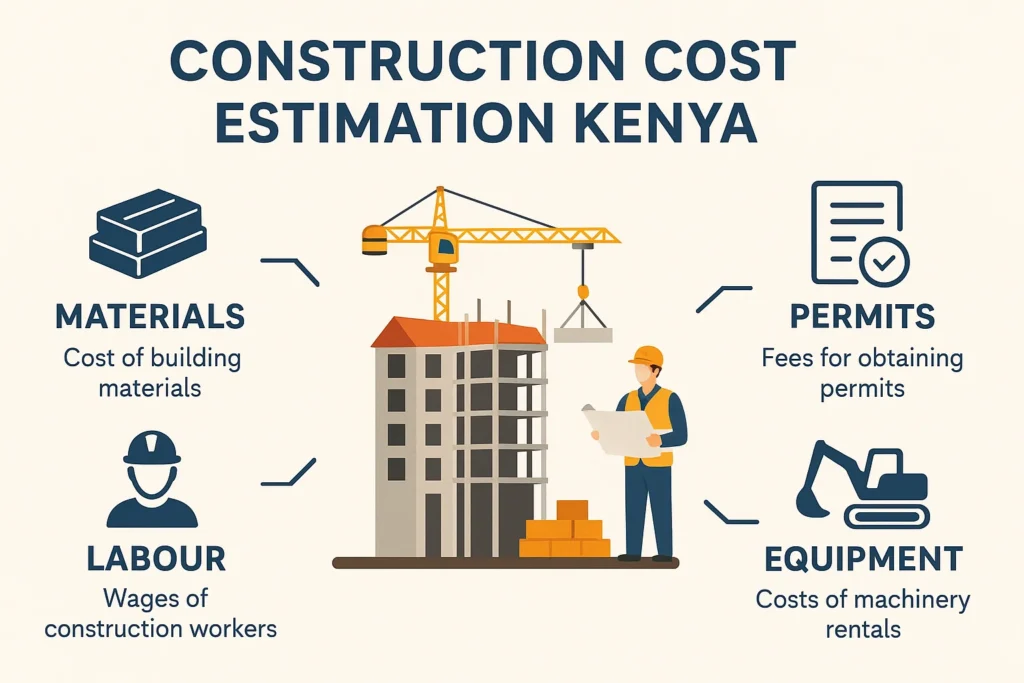
In Kenya, construction costs are usually estimated per square meter, depending on factors such as location, design complexity, and finishing level. While rates may vary across regions, basic residential construction generally falls within a wide range, with simple finishes being more affordable and high-end finishes significantly increasing the cost per square meter. However, focusing only on the lowest quotation without understanding what is included can lead to incomplete budgeting and future financial strain.
Hidden costs are another major concern when working with unreliable or overly cheap contractors. One of the most common issues is project delays, which increase labor costs and extend rental or financing expenses. Another hidden cost is material wastage, often caused by poor handling, lack of planning, or mismanagement on site. Additionally, rework becomes necessary when poor workmanship leads to structural or finishing defects that must be corrected, further increasing overall project expenses.
Balancing budget and quality is therefore essential. A good contractor may not always be the cheapest, but they provide value through efficiency, proper planning, and durable workmanship. This ensures that the structure requires fewer repairs over time and maintains its value.
Ultimately, the goal is not to find the lowest price but the best overall return on investment. By prioritizing quality alongside affordability, homeowners in Kenya can avoid unnecessary losses and ensure their construction projects are completed to a high and lasting standard.
Importance of Contracts and Legal Agreements
In construction projects across Kenya, one of the most overlooked yet most critical elements is having a clear and legally binding contract. Many disputes between homeowners and contractors arise simply because agreements were made verbally and not documented properly. While verbal agreements may seem convenient at the beginning, they often fail when misunderstandings, delays, or financial disagreements occur.
A proper construction contract provides structure and clarity for both parties. It should clearly define the scope of work, outlining exactly what the contractor is expected to deliver, including materials, workmanship standards, and project specifications. Without this, contractors may interpret requirements differently, leading to unfinished or substandard work.
The contract should also include a detailed payment schedule, specifying how and when payments will be made. In most professional setups, payments are tied to project milestones such as foundation completion, walling, roofing, and finishing. This protects the client from paying large sums upfront and ensures the contractor remains motivated to complete each stage properly.
Another essential component is the project timeline, which sets clear start and completion dates. This helps prevent unnecessary delays and ensures accountability if the project takes longer than expected. Closely related to this is the inclusion of penalties for delays, which encourages contractors to adhere to agreed timelines unless there are justified reasons such as weather or material shortages.
In more complex projects, involving lawyers or construction consultants is highly recommended. These professionals help draft or review contracts to ensure all legal and technical aspects are covered, reducing the risk of loopholes that could lead to disputes later.
Ultimately, a well-written contract offers protection for both the client and the contractor. It ensures that expectations are clear, responsibilities are defined, and both parties are legally safeguarded throughout the construction process. In Kenya’s fast-growing construction industry, a strong contract is not just a formality—it is a foundation for project success.
Common Mistakes People Make When Choosing Contractors
Many construction failures in Kenya are not caused by lack of money or poor design, but by avoidable mistakes made during the contractor selection process. Understanding these mistakes helps homeowners and investors make smarter decisions and protect their projects from unnecessary losses.
One of the most common mistakes is choosing a contractor based on the lowest price only. While it may seem cost-effective at first, extremely low quotations often lead to poor workmanship, use of substandard materials, or hidden costs later in the project. In most cases, cheap becomes expensive over time due to repairs and rework.
Another major mistake is skipping verification of credentials. Many clients fail to check whether a contractor is registered with the National Construction Authority (NCA), has a valid business identity, or has completed similar projects. This exposes them to fraud, abandonment, or unqualified workmanship.
A serious oversight is not involving an architect or quantity surveyor (QS). These professionals play a key role in ensuring proper design execution, accurate costing, and quality control. Without them, clients often rely entirely on the contractor, increasing the risk of mismanagement and inflated costs.
Many people also make the mistake of paying large deposits upfront before any significant work has begun. This reduces accountability and increases the risk of delays, incomplete work, or financial disputes if the contractor loses motivation or misuses funds.
Another issue is the absence of a site supervision system. Without regular supervision by a professional or client representative, contractors may cut corners, delay work, or deviate from approved plans without being noticed early.
Lastly, ignoring written agreements is a costly mistake. Relying on verbal agreements often leads to misunderstandings about payment terms, project scope, and timelines, making disputes difficult to resolve.
Avoiding these mistakes significantly increases the chances of a successful construction project. Careful planning, proper verification, and professional involvement ensure that your investment is secure and your project progresses smoothly from start to finish.
Warning Signs of an Unreliable Contractor
Identifying an unreliable contractor early can save you from major financial losses, project delays, and poor workmanship. In Kenya’s construction industry, many problems could be avoided if clients paid closer attention to warning signs before committing to a contractor.
One of the clearest red flags is no physical office or permanent business location. A contractor who cannot be traced to a known office is often difficult to hold accountable once issues arise. Reliable contractors are usually easy to locate and operate from established offices or registered business premises.
Another warning sign is poor communication. If a contractor takes too long to respond, avoids clear answers, or frequently changes information, it may indicate disorganization or lack of professionalism. Good communication is essential for smooth project coordination.
Be cautious of unrealistically low pricing. While everyone wants to save money, extremely cheap quotations often mean the contractor is cutting corners, using low-quality materials, or hiding future costs that will appear later during construction.
A serious concern is avoiding written contracts. Contractors who resist formal agreements may be trying to bypass accountability. Without a contract, it becomes difficult to enforce timelines, quality standards, or payment terms.
You should also watch out for frequent excuses on site, such as delays in labor, missing materials, or unexplained stoppages. While occasional challenges are normal, consistent excuses usually indicate poor planning or mismanagement.
Lastly, lack of material accountability is a major warning sign. A reliable contractor should be able to clearly explain how materials are used, stored, and accounted for on site. Poor tracking often leads to wastage, theft, or inflated project costs.
Recognizing these warning signs early helps you avoid risky contractors and ensures your construction project remains on track, within budget, and completed to a professional standard.

Role of Professionals in Ensuring Contractor Reliability
In construction projects in Kenya, hiring a reliable contractor is important, but it is not enough on its own. The involvement of qualified professionals such as architects, quantity surveyors, engineers, and project managers plays a major role in ensuring that the contractor delivers quality work, follows the design, and stays within budget.
The architect is responsible for ensuring design compliance. They develop the building plans and make sure the contractor executes the project exactly as designed. The architect also helps interpret drawings on site, reducing the chances of errors or deviations that could affect the final structure.
The quantity surveyor (QS) ensures cost control throughout the project. They prepare the Bill of Quantities (BOQ), monitor expenditures, and evaluate any variations or additional costs. With a QS involved, it becomes difficult for contractors to inflate prices or introduce hidden charges without proper justification.
The structural engineer focuses on safety and structural integrity. They ensure that the foundation, columns, beams, and slabs are constructed according to approved engineering standards. Their supervision reduces the risk of structural failures, which can be costly or even dangerous in the long term.
A project manager oversees the overall execution of the project. They coordinate between the client, contractor, and other professionals to ensure smooth workflow, proper scheduling, and timely completion. They also monitor daily progress and resolve on-site issues before they escalate.
Together, these professionals act as a system of checks and balances that significantly reduces the risk of contractor fraud, mismanagement, and poor workmanship. When a contractor knows that their work is being monitored by qualified experts, they are more likely to adhere to standards, follow the BOQ, and maintain transparency.
Ultimately, involving professionals does not just improve construction quality—it also protects the client’s investment. It ensures accountability at every stage and creates a structured environment where the contractor can perform efficiently while staying within clear technical and financial boundaries.
Step-by-Step Process to Hiring a Contractor in Kenya (400–450 words)
Hiring a contractor in Kenya should follow a clear and structured process to reduce risks, control costs, and ensure successful project delivery. Many construction failures happen because homeowners rush into hiring without proper planning. Following the right steps helps you identify a qualified contractor and set a strong foundation for your project.
Define Your Project Scope
Start by clearly outlining what you want to build. This includes the type of structure (bungalow, maisonette, or apartment), number of rooms, finishing level, and budget range. A well-defined scope helps prevent confusion and scope changes later.
Get Architectural Drawings
Engage a qualified architect to design your project. Architectural drawings provide the technical blueprint of the building, ensuring proper space planning, structural layout, and compliance with building regulations.
Prepare a Bill of Quantities (BOQ)
A quantity surveyor should prepare a BOQ to break down the cost of materials, labor, and other construction expenses. This document is essential for accurate pricing and prevents contractors from giving vague or inflated estimates.
Shortlist Contractors
Identify potential contractors using referrals, site visits, professional networks, or verified listings. Narrow down to those with relevant experience in similar projects.
Request Quotations
Share your drawings and BOQ with shortlisted contractors and request detailed quotations. Ensure each quote is structured in a similar format for easy comparison.
Compare Pricing and Experience
Do not focus on price alone. Compare contractors based on experience, past projects, timelines, and professionalism. The cheapest option is not always the best choice.
Conduct Site Visits
Visit ongoing or completed projects handled by the contractor. This gives you real insight into workmanship quality, site organization, and attention to detail.
Sign a Contract
Once satisfied, formalize the agreement with a written contract. It should include scope of work, payment schedule, timeline, and penalties for delays.
Start Construction with Proper Supervision
Begin the project with regular supervision from professionals such as an architect, engineer, or project manager. This ensures the contractor follows the plan, maintains quality standards, and sticks to the agreed budget.
Following this structured process significantly increases your chances of hiring a reliable contractor and successfully completing your construction project in Kenya without unnecessary delays or financial losses.
Real Project Scenario Example (Optional but Powerful) (250–300 words)
To understand the importance of choosing the right contractor in Kenya, let’s look at a real-life construction scenario involving two different approaches—one successful and one problematic.
A homeowner in Nairobi planned to build a two-storey rental apartment. Initially, they selected a contractor based on the lowest quotation, hoping to save on costs. However, the contractor had no verified credentials, minimal documentation, and no structured payment plan. Within a few months, the project experienced delays, poor material management, and frequent site excuses. Eventually, work slowed down significantly, and the project remained incomplete for several months due to mismanagement and financial disputes.
In contrast, another homeowner with a similar project followed a structured selection process. They engaged an architect and quantity surveyor first, prepared detailed drawings and a BOQ, and shortlisted contractors based on experience and verified credentials. After conducting site visits and checking references, they selected a registered contractor with proven experience in apartment construction.
The results were significantly different. The project was completed within the planned timeline, with controlled costs and consistent workmanship quality. While the initial quotation was slightly higher than the cheapest option, there were no hidden costs, no major delays, and minimal rework required.
In terms of timelines, the poorly managed project extended far beyond the expected completion period, causing financial strain and lost rental income opportunities. On the other hand, the well-managed project was delivered on schedule, allowing the owner to start generating income sooner.
This comparison clearly shows that contractor selection directly impacts cost, time, and quality. A reliable contractor, supported by professionals and proper documentation, ensures a smooth construction process, while poor selection often leads to delays, frustration, and financial loss.
Conclusion: Making the Right Choice
Choosing the right contractor in Kenya is one of the most important decisions in any construction project, as it directly affects cost, quality, and overall project success. Throughout this guide, it is clear that success in construction does not depend on luck, but on proper planning, verification, and informed decision-making.
One of the key takeaways is that verification is essential. Before hiring any contractor, it is important to confirm credentials such as NCA registration, past project experience, and physical office location. This simple step significantly reduces the risk of fraud, poor workmanship, or project abandonment.
Another important lesson is that price should never be the only deciding factor. While budget is important, selecting a contractor based solely on the lowest quotation often leads to hidden costs, delays, and substandard work. A slightly higher but transparent and experienced contractor is usually a better long-term investment.
It is also clear that involving professionals reduces risk. Architects, quantity surveyors, engineers, and project managers play a crucial role in ensuring proper design execution, cost control, safety, and quality assurance. Their involvement creates accountability and minimizes disputes between clients and contractors.
Ultimately, successful construction starts long before the first brick is laid. Proper planning—through clear project scope, accurate BOQs, structured contracts, and careful contractor selection—ensures smoother execution and fewer surprises along the way.
By applying these principles, homeowners and investors in Kenya can confidently move forward with their construction projects, knowing they have taken the right steps to protect their investment and achieve lasting results.
Call to Action (High-Converting Section) (150–200 words)
Ready to Build Your Dream Home or Apartment in Kenya?
Don’t risk your investment with the wrong contractor.
Get professional support for:
✔ Architectural house and apartment designs
✔ Accurate Bills of Quantities (BOQ)
✔ Contractor vetting and recommendations
✔ Project supervision and cost control
📞 Call/WhatsApp 0724 481 087
📧 Email: info@construction.co.ke
Start your project the right way — with trusted professionals guiding every step.