Land Scams in Kenya — How to Protect Your Investment
Learn how to spot and avoid land scams in Kenya, including fake title deeds, double sales, and property fraud. Follow our step-by-step land due diligence guide to secure your investment safely.
Introduction
Land Scams in Kenya — How to Protect Your Investment
The land market in Kenya is growing rapidly, attracting investors and homebuyers alike. Unfortunately, this growth has also led to a rise in land scams in Kenya, costing buyers millions of shillings every year. From fake title deeds to ghost plots, property fraud is a real risk that can affect anyone without proper knowledge or precautions.
Performing thorough due diligence is critical before buying land. Verifying ownership, checking for disputes, and consulting licensed professionals can protect your investment and give you peace of mind.
Quick Snapshot
Here’s what you need to know about land scams in Kenya at a glance:
- Common scams: Fake title deeds, double or multiple sales, ghost plots, unlicensed brokers, and illegal subdivisions.
- Due diligence is key: Physical inspections, legal checks, and consultation with licensed surveyors or advocates can prevent fraud.
- Financial impact: Falling for a scam can lead to significant monetary losses and legal battles.
- Red flags: Unrealistic prices, pressure to pay quickly, and sellers avoiding official verification are major warning signs.
What Are Land Scams in Kenya?
Land scams in Kenya are fraudulent schemes designed to trick buyers into purchasing land illegally or under false pretenses. These scams often involve fake title deeds, double sales, ghost plots, or unlicensed brokers. Understanding the nature of these scams is the first step in protecting your investment.
Understanding Property Fraud
Property fraud occurs when someone misrepresents ownership, boundaries, or legal permissions to sell land they don’t legally own. This can involve fake title deeds, impersonation, or misrepresentation of plot size and location. Buyers should always cross-check property records, inspect the land physically, and verify seller identity to avoid falling victim.
Legal Implications of Land Scams
Buying land without proper verification can lead to serious legal consequences. Victims may face lawsuits, loss of money, or disputes with multiple claimants. Kenyan law provides remedies for victims, but navigating the legal system can be expensive and time-consuming. Legal consultation before finalising a purchase is essential.
Historical Overview of Land Scams in Kenya
Land scams in Kenya have a long history, especially in urban and peri-urban areas. High-demand regions like Nairobi, Mombasa, and Kisumu have seen numerous fraudulent schemes over the years, including fake subdivisions and ghost developments. Learning from past cases can help buyers recognise warning signs early and avoid common pitfalls.
Common Types of Land Scams
Kenya has a variety of land scams that target both local and foreign buyers. Knowing the most common types can help investors perform proper due diligence and avoid costly mistakes.
Fake Title Deeds
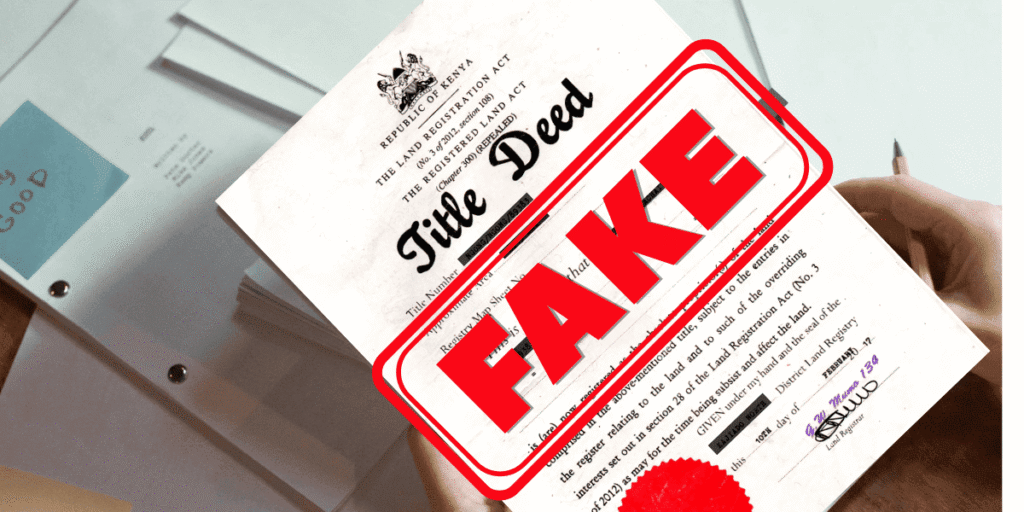
Fake title deeds are one of the most common forms of property fraud in Kenya. Scammers often forge official-looking documents to make a plot appear legitimate. Always verify deeds using government platforms like ArdhiSasa or the Ministry of Lands.
Double or Multiple Sales
This scam happens when the same plot is sold to more than one buyer. Conflicts typically arise during land registration, leading to legal disputes and financial loss. Buyers should always conduct official searches and request proof of previous sales.
Selling Land Without Legal Authority
Some sellers do not have the legal right to sell a property but claim ownership. This can include impersonation or selling land under family disputes. Verifying ownership through government records is essential before making any payment.
Ghost Plots & Non-Existent Land
Ghost plots are parcels that do not exist or are claimed illegally. Buyers are lured with attractive prices or prime locations. Visiting the land physically and checking official maps can prevent falling into this trap.
Fake Brokers and Developers
Unlicensed brokers or fraudulent developers may advertise non-existent or unapproved projects. Always work with licensed agents and verify the developer’s registration and past projects before committing.
Illegal Subdivisions & Encroachments
Some plots are subdivided without approval or boundaries are altered to sell extra land. This can lead to disputes with neighbors or government authorities. Check subdivision approvals and survey maps to ensure legality.
The Cost of Falling for a Land Scam
Financial Losses
Buying land from scammers can lead to significant monetary loss. Victims may pay large sums for plots that don’t exist, have fake title deeds, or are sold multiple times. Recovering money through legal channels can be slow and expensive.
Legal Consequences
Purchasing land without verifying ownership or approvals can lead to legal disputes. Buyers may face lawsuits from previous owners or multiple claimants. Additionally, improper transactions can cause issues during land registration or property transfers.
Emotional & Social Impact
Being scammed can cause stress, anxiety, and mistrust in the property market. Victims may also face social embarrassment or strained relationships when disputes arise. This makes prevention and careful due diligence even more important.

Land Due Diligence — Step‑by‑Step
Proper land due diligence in Kenya is the most effective way to avoid scams. Following a structured process ensures you verify ownership, confirm legality, and secure your investment.
Step 1 — Verify Ownership and Title Deed
Always check the title deed with ArdhiSasa or the Ministry of Lands. Confirm the owner’s name, plot number, and registration details. This prevents falling victim to fake deeds or double sales.
Step 2 — Visit the Land & Confirm Boundaries
Physically inspect the land to confirm its existence and size. Check that the plot boundaries match official maps and surveyor reports. Avoid buying land without visiting it in person.
Step 3 — Check for Encumbrances & Disputes
Look for caveats, liens, or ongoing disputes. Ensure there are no claims by other parties, family members, or previous owners. This reduces the risk of legal challenges after purchase.
Step 4 — Confirm Legal Permissions
Verify that the land has proper approvals, such as subdivision permits or agricultural land consent (if applicable). Buying land without approvals can make your purchase illegal.
Step 5 — Use Lawyer & Escrow/Bank Services
Engage a licensed property lawyer to review agreements and handle payments securely. Use escrow or bank services to ensure funds are only released after proper verification.
Step 6 — Engage Licensed Surveyors & Agent
Hire licensed surveyors to confirm boundaries and verify subdivision plans. Work only with registered brokers or developers to ensure your transaction is legitimate.
Red Flags & Warning Signs of Land Scams
Unrealistic Price Offers
One of the most common red flags is a land price that seems too good to be true. Scammers often advertise prime plots at extremely low rates to lure unsuspecting buyers.
- Extremely low prices compared to market rates should trigger caution.
- Always compare the asking price with similar properties in the area.
- Avoid paying upfront without verification.
Sellers Avoiding Lawyers/Surveys
Fraudsters often discourage buyers from involving lawyers or surveyors, claiming it will slow down the process or incur unnecessary costs.
- Legitimate sellers have no reason to prevent legal review.
- Always insist on professional verification and legal oversight.
- Never proceed with a transaction without consulting a lawyer or licensed surveyor.
Pressure to Pay Quickly
Many scammers create a sense of urgency to push buyers into quick payments. They may claim limited availability or high demand.
- Avoid transactions where sellers demand immediate payment.
- Take time to conduct proper due diligence, verify documents, and inspect the land.
- Use secure payment channels such as escrow or bank transfer.
Hesitation on Official Searches
A legitimate seller will encourage buyers to perform official searches. Hesitation or refusal to allow this is a major warning sign.
- Always verify land ownership and title deeds through ArdhiSasa or county land offices.
- Avoid sellers who discourage checking land records or official maps.
Inconsistent Plot Documents
Fraudulent sellers often provide documents with discrepancies, such as mismatched plot numbers, owner names, or survey details.
- Carefully review all land documents and compare them with official records.
- Discrepancies, missing stamps, or forged signatures indicate potential fraud.
- Always cross-check documents before payment.

Tools & Resources for Safe Land Buying
Using the right tools and resources can protect buyers from property fraud in Kenya. Combining official platforms, licensed professionals, and local records ensures that land purchases are safe and legal.
Government Platforms (ArdhiSasa, eCitizen)
Government portals such as ArdhiSasa and eCitizen allow buyers to verify title deeds, land ownership, and subdivision approvals.
- Use these platforms to confirm plot details before committing to purchase.
- They provide official records that are recognised in legal disputes.
- Always double-check digital results with physical documents from county offices.
Licensed Professionals (Surveyors, Advocates, Brokers)
Engaging licensed professionals ensures that every step of the land purchase process is verified and legally sound.
Surveyors confirm boundaries and plot measurements.
- Advocates review agreements and handle legal documentation.
- Brokers registered with recognised authorities facilitate legitimate transactions.
Online Verification Tools (Kenya Land Title Registry)
The Kenya Land Title Registry and other official online tools provide access to verified records of land ownership and encumbrances.
- Use these tools to detect fake title deeds or disputed plots.
- Always cross-check online information with physical verification at county offices.
Local County Offices & Land Registries
County land offices maintain official records of land ownership, approvals, and subdivisions. Visiting these offices can uncover encumbrances, disputes, or unapproved developments.
- Check for caveats, pending litigation, or government restrictions.
- Always request certified copies of ownership and approval documents.

Conclusion
Buying land in Kenya can be rewarding, but the risk of land scams in Kenya is real. The key to safe investment lies in:
- Verification: Always confirm ownership, boundaries, and approvals.
- Legal checks: Engage licensed property lawyers and surveyors to handle contracts and inspections.
- Professional guidance: Work with licensed brokers and developers to reduce fraud risk.
Next Steps for Buyers:
- Perform proper land due diligence using government platforms and professional support.
- Be cautious of red flags such as low prices, pressure to pay, or suspicious documents.
- Educate yourself about common scams and historical fraud patterns to make informed decisions.