Discover the key unregistered land risks in Kenya, from fraud and disputes to financing challenges, and learn how proper land registration and due diligence protect buyers.
Introduction
Buying land is one of the biggest investments you’ll make, but unregistered land risks in Kenya can lead to serious financial and legal problems. Without proper land registration in Kenya, you might face ownership disputes, fraud, or challenges securing financing. Understanding these risks and taking the right precautions helps protect your investment and ensures legal land ownership.
This guide explains the main risks, common scams, and practical steps to safeguard yourself. It also shows how buyer risk can be minimised with proper verification, legal checks, and working with licensed professionals.
Disclaimer ⚠️: This article is for general informational purposes only and does not constitute legal advice. Land laws and registration processes in Kenya may vary by location and circumstance. Buyers should consult a licensed advocate or land professional before purchasing land.
What Is Unregistered Land?
Definition of Unregistered Land
Unregistered land refers to property that has not been officially recorded with the government’s land registry in Kenya. Without registration, the land does not have a recognised title deed, making it difficult for buyers to claim legal land ownership. Purchasing such land exposes buyers to potential disputes or claims by other parties.
How It Differs from Registered Land
Registered land comes with a legally recognised title deed, verified by the Ministry of Lands, giving the owner official proof of ownership. In contrast, unregistered land lacks this documentation, meaning the government does not formally acknowledge the owner. This difference affects your ability to sell, lease, or use the land as collateral for loans.
Customary vs. Statutory Land Ownership in Kenya
In Kenya, unregistered land is often held under customary ownership, especially in rural areas. Statutory ownership, on the other hand, is recognised by law and registered with the relevant authorities. Understanding this distinction helps buyers evaluate the risks of buying unregistered land and ensure they acquire secure legal rights.

Major Risks of Buying Unregistered Land
Lack of Legal Land Ownership Security
When you buy unregistered land in Kenya, you do not receive a formal title deed, which is the government-recognised proof of ownership. This lack of legal documentation means that even after paying for the land, another party could claim ownership, leaving you vulnerable to costly disputes. Additionally, you cannot officially register improvements or developments on the land without proper legal recognition.
Vulnerability to Fraud and Forged Titles
Unregistered land is a common target for fraudsters because it is easier to manipulate ownership claims. Buyers may encounter fake title deeds, ghost plots that don’t exist, or sellers attempting to sell the same plot multiple times. Without proper verification, investing in unregistered land can result in losing both money and legal recourse.
Multiple/Conflicting Ownership Claims
In cases where land is unregistered, it is not unusual for multiple individuals or families to claim ownership of the same plot. Conflicting ownership claims often escalate into court disputes that take years to resolve, making it extremely risky for first-time buyers or investors who need legal certainty before proceeding.
Boundary & Survey Discrepancies
Unregistered land may not have accurate boundaries or proper surveys approved by licensed surveyors. This can lead to disagreements with neighbors, disputes over encroachment, or even legal action if construction begins in the wrong location. Ensuring clear, verified boundaries is crucial for avoiding expensive conflicts.
Hidden Encumbrances (Mortgages, Liens, Caveats)
Even if a plot appears available, unregistered land may carry hidden financial obligations. The property could be used as collateral for loans, have unpaid rates or taxes, or be subject to caveats restricting its transfer. Buyers who fail to uncover these encumbrances risk inheriting debts or facing legal challenges from creditors.
Government or Public Land Misclassification
Some unregistered plots may actually fall under government ownership, such as road reserves, riparian zones, or protected conservation areas. Buying land in such areas can result in eviction notices, legal disputes, or penalties. It’s essential to verify zoning and land use restrictions before making any payment.

Legal Framework: Land Registration in Kenya
How Land Registration Kenya Works
In Kenya, land registration is governed by the Land Registration Act, which ensures that property ownership is formally recorded and legally recognised. Registered land comes with a title deed, which protects the owner against disputes and establishes proof of legal land ownership. The registration process involves verifying the seller’s documents, conducting surveys, and submitting the information to the Ministry of Lands. Proper registration provides buyers with security and enables them to use the land for development or as collateral for loans.
Title Search and Ministry of Lands Verification
Before purchasing land, conducting a title search with the Ministry of Lands is crucial. This process confirms whether the land is registered, checks for any existing encumbrances, and validates the owner’s identity. A title search minimises buyer risk by revealing any legal disputes, mortgages, caveats, or government claims attached to the property.
Land Control Board (LCB) Consent Requirements
The Land Control Board (LCB) plays a critical role in regulating sales of agricultural land in Kenya. Any transaction involving registered or unregistered land requires LCB approval to prevent illegal transfers or sales. Obtaining LCB consent protects buyers from invalid contracts and ensures the transaction complies with legal standards, reducing buyer risk significantly.
Role of National Land Commission & County Records
The National Land Commission (NLC) and county land offices maintain public records of land ownership, zoning, and usage. Verifying land details with these authorities ensures that the plot is not government-owned or restricted and confirms the legitimacy of the seller. Using NLC and county records is an essential step to protect your investment and avoid purchasing land with hidden liabilities.
Common Scams & Buyer Risk
Fake or Forged Title Deeds
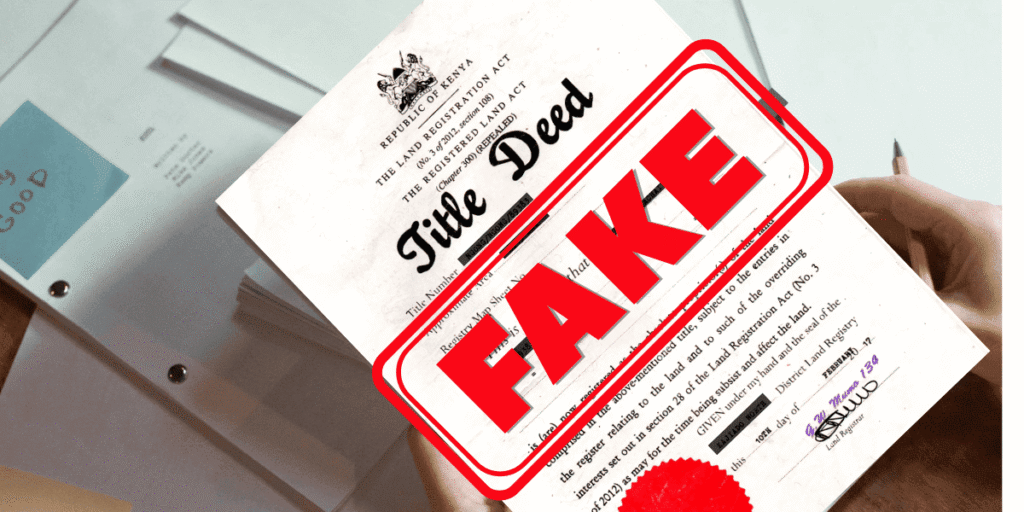
A frequent scam in Kenya involves fake or forged title deeds, where sellers attempt to sell land they do not legally own. Buyers who fail to verify ownership can lose money and face lengthy legal battles. Always cross-check the deed with the Ministry of Lands and engage a lawyer to authenticate documents before completing the transaction.
Double Sales of the Same Parcel
Some unscrupulous sellers attempt to sell the same parcel of unregistered land to multiple buyers. Without proper registration, the first buyer may not have legal recourse against subsequent claims. Conducting a thorough title search and obtaining LCB approval helps prevent such double-sale scams.
Illegal Subdivisions & Unapproved Plots
Fraudsters sometimes sell land that has been illegally subdivided or not approved for sale by the county government. Buying such plots can lead to government repossession, fines, or disputes with neighboring landowners. Always confirm zoning and subdivision approvals before purchasing.
Unlicensed Agents & Misrepresentation
Unlicensed real estate agents may misrepresent own the membership, land size, or value to push a sale. Working only with licensed agents and verifying their credentials protects buyers from false claims and reduces buyer risk.
Pressure Tactics and Too‑Good‑to‑Be‑True Deals
Some sellers use aggressive pressure tactics or offer land at suspiciously low prices to rush buyers into decisions. Falling for these tactics can lead to purchasing unregistered or fraudulent land. Take time to verify all documents, consult legal professionals, and avoid any rushed transactions.

Conclusion
Summary of Key Points:
Buying unregistered land in Kenya carries significant legal and financial risk. Common issues include fraud, boundary disputes, double sales, and hidden liabilities. Ensuring the land is properly registered protects your investment and establishes clear legal land ownership.
Best Practices to Protect Yourself:
- Conduct a title search via eCitizen or the Ministry of Lands.
- Verify seller identity and chain of title to avoid conflicts.
- Engage licensed surveyors and lawyers to review all documents.
- Obtain clearance certificates for land rates, rent, and taxes.
- Always confirm LCB consent and zoning compliance where required.