Every house, apartment block or commercial building in Kenya depends on decisions you never see once the plaster goes on: how deep the foundation goes, how much steel sits in each beam and column, and whether the slab can carry the water tank on the roof. Those decisions belong to a structural engineer Kenya property owners can trust. Yet many people only meet one when the county asks for structural drawings, or worse, when cracks start to appear.
This guide explains what a structural engineer actually does on a Kenyan project, how the role differs from a civil engineer, what the law now requires, and what you should expect to receive. If you are planning a build and want a qualified team from the start, our engineering and construction partner, Marble Engineering and Construction Ltd, offers structural engineering solutions by Marble Engineering for homes, apartments and commercial buildings across Kenya.
Need structural drawings or an engineer to check your plans? WhatsApp 0789 217 685
What a structural engineer in Kenya actually does
An architect decides how a building looks and how its spaces work. The structural engineer decides how it stands up. In practice, structural design covers every element that carries load, from the soil to the roof.
- Reads the soil report and chooses a foundation type (strip, pad, raft or piles) that suits the ground’s bearing capacity.
- Calculates loads: the weight of the structure itself, people and furniture, water tanks, wind and, for taller buildings, future floors.
- Sizes beams, columns, slabs and walls and specifies concrete class and reinforcement.
- Produces structural drawings and calculations for county approval and for the contractor on site.
- Inspects work on site, especially reinforcement before concrete is poured.
- Assesses existing buildings before you add floors, change use or buy a property with visible cracks.
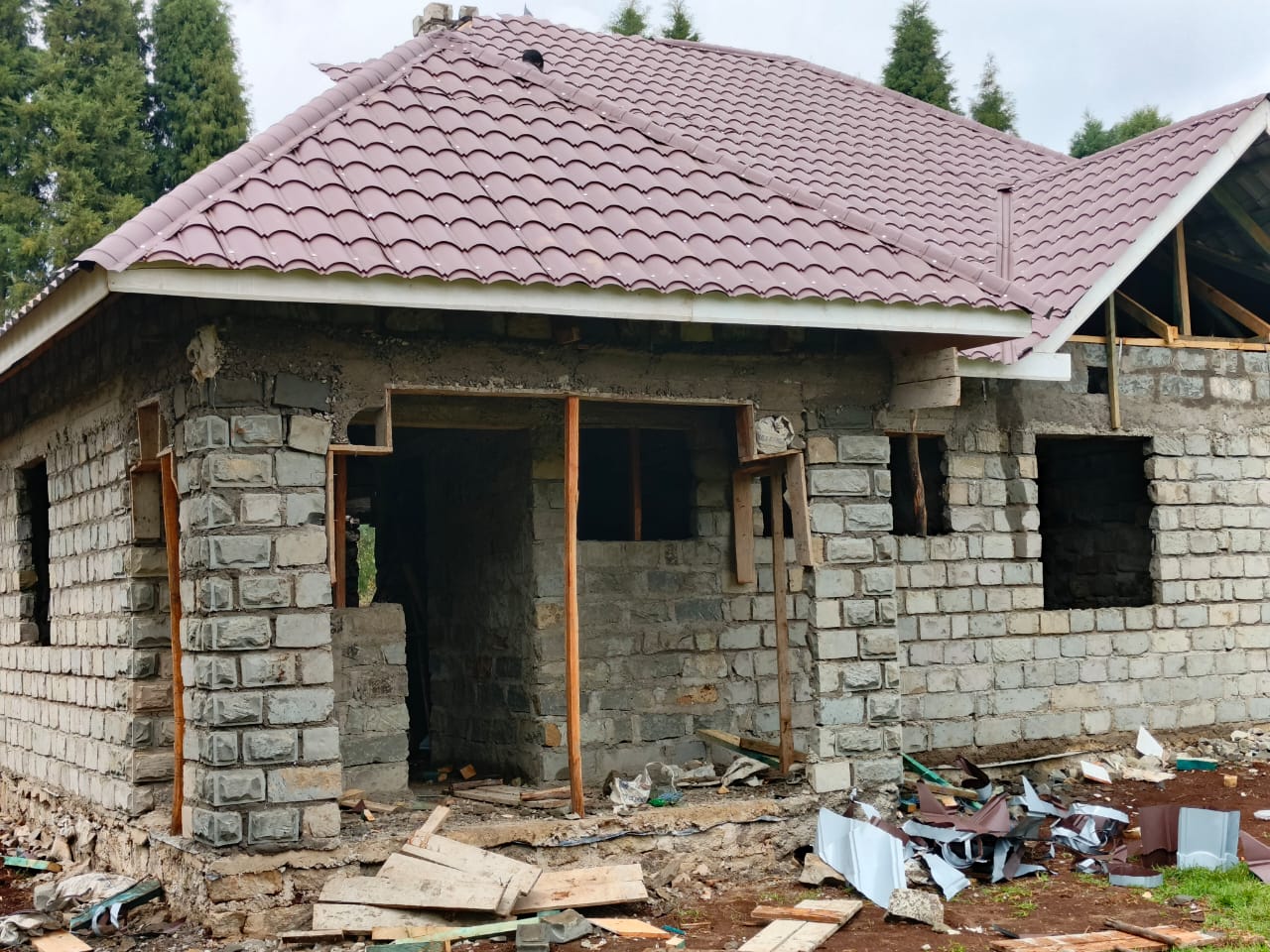
The foundation stage is where many Kenyan projects go wrong. Our guide to house foundation types and costly mistakes in Kenya shows why the engineer’s input there matters so much.
Civil engineer vs structural engineer: what is the difference?
People often use the terms interchangeably, and in Kenya many structural engineers trained first as civil engineers. The difference is focus. Civil engineering is the broad discipline; structural engineering is a specialism within it.
| Aspect | Civil engineer | Structural engineer |
|---|---|---|
| Main focus | Infrastructure: roads, drainage, water supply, earthworks, site works | Load-bearing elements of buildings and structures |
| Typical outputs | Site layout, drainage and road designs, levels | Foundation, column, beam and slab designs; reinforcement schedules; calculations |
| When you need them | Estates, access roads, storm water, large sites | Any storeyed building, apartments, extensions, heavy roofs or water tanks |
| Overlap | On many residential projects one registered engineer handles both, provided the work is within their competence and registration | |
The question to ask is not the job title but whether the person signing your drawings is properly registered and experienced in building structures of your size.
Why you need an EBK registered engineer
Engineering practice in Kenya is regulated by the Engineers Board of Kenya (EBK) under the Engineers Act, No. 43 of 2011. In a 2025 public warning reported by People Daily, EBK reminded the public that hiring unregistered persons for engineering work is illegal and dangerous. The report notes that:
- Unregistered persons may not submit drawings, reports or designs to any authority or client.
- Graduate engineers must work under the direct supervision of registered professionals.
- Practising or charging fees without a valid licence can attract a fine of up to KSh 2 million, up to five years in jail, or both.
For you as an owner, an EBK registered engineer means accountability. If their design fails, there is a professional body and a legal framework behind them. Before you pay a deposit, ask for the engineer’s name and registration number and check it against EBK’s published register, and make sure the contractor building your design is registered with the National Construction Authority.
The Building Code 2024 and soil testing
Kenya’s National Building Code 2024 became legally effective on 1 March 2025, replacing the 1968 code, according to Logistics Business Africa. It puts a strong emphasis on structural integrity and fire safety, and reports indicate it makes soil testing a requirement, especially for multi-storey buildings, where geotechnical assessment sets design values such as allowable bearing pressure (Mwakilishi).
This changes how a structural engineer works. Instead of assuming “good ground”, your engineer should base the foundation design on a proper soil investigation, with extra care on black cotton soil and other expansive clays common around Nairobi, Kisumu and parts of the Rift Valley.

What you should receive from your structural engineer
A professional structural design package is more than a few sketches. For a typical residential or small commercial project, expect:
- Foundation layout and details, based on the soil report.
- Column and beam layouts with sections and reinforcement details.
- Slab designs (suspended slabs, staircases, roof slab or roof support details).
- Bar bending schedules so the quantity surveyor and contractor can price and order steel accurately.
- Structural calculations, signed and stamped, for submission with your county building plan approval.
- A schedule of site inspections at critical stages.
Structural drawings form part of the approval file. Our step-by-step guide to house plan approval in Kenya explains where they fit in the county process.
When to bring in a structural engineer
- At concept stage, so the architect’s layout works structurally and you avoid costly redesign.
- Before buying land for a multi-storey project, to understand foundation implications of the soil.
- Before adding floors to an existing house or building. Never assume the original foundation can carry more.
- When you see cracks, sagging slabs or leaning walls.
- During construction, for reinforcement inspections before every major pour.
Recent building failures in Kenya show what happens when this step is skipped. Read our lessons from the Syokimau building collapse for practical warning signs.
What affects the cost of structural design
Fees vary widely, so rather than quote a single figure, it helps to understand the cost drivers:
- Building size and height: a bungalow needs far less analysis than a five-storey apartment block.
- Ground conditions: poor soil can mean raft or piled foundations and more design time.
- Complexity: long spans, cantilevers, basements and roof terraces all add work.
- Scope of site supervision: design only, or design plus regular inspections.
- Whether the engineer is part of a design-build team, which can reduce coordination costs and redesign.
Remember that the engineer’s fee is small compared with the cost of over-designed steel or, worse, remedial work on a structure that was under-designed. A good structural engineer in Kenya often saves you money by specifying exactly what the building needs.
Frequently asked questions
Do I need a structural engineer for a bungalow?
Yes. Counties generally expect structural details with building plans, and even a single-storey house needs a foundation suited to its soil. A heavy roof, a raised water tank or plans to add a floor later make structural design even more important.
How do I check if an engineer is registered in Kenya?
Ask for their full name and registration number, then confirm it against the Engineers Board of Kenya register. A genuine EBK registered engineer will be happy to provide this.
Can my contractor do the structural design?
Only if the design is prepared and signed by a registered engineer. In a design-build arrangement the contractor’s team includes that engineer, which keeps responsibility in one place.
Get your structure designed right the first time
From soil-based foundation design to stamped structural drawings and site inspections, our engineering and construction partner provides structural engineering solutions by Marble Engineering for homes, apartments and commercial projects across Kenya.
Or call 0789 217 685 / 0724 481 087.